Every summer, the same group chat plays out somewhere in the Seattle area — somebody scores Watershed tickets, the excitement peaks fast, and then the planning conversation begins. Who draws the short straw on driving? Do we leave at noon to beat the Silica Road backup, or just accept the queue?
What happens if someone wants to leave early and the rest of the group doesn't? And when the show ends at midnight and you're 150 miles from home with no reliable rideshare in rural Grant County, what exactly is the plan? That conversation — the one that turns a concert announcement into a logistics puzzle — is the exact problem a Seattle charter bus rental to the Gorge Amphitheatre solves.
One vehicle, one plan, one pickup window after the encore.
This guide covers every practical piece of the Gorge run: the I-90 drive over Snoqualmie Pass, what Silica Road entry looks like on a festival day, where commercial buses drop off and stage, and how the right vehicle changes completely depending on whether your group is staying on site for three nights or doing a same-night return to the city. Every venue fact comes directly from the official Gorge Amphitheatre pages and verified sources. To compare vehicles and get pricing for your specific date, fill out the quick form on this site or call 206-207-5590 — a support team is available any time.
Why Rent a Charter Bus or Party Bus to the Gorge Amphitheatre
Two things make the Gorge Amphitheatre a different transportation problem than any arena or stadium in the Puget Sound area. First: it is genuinely remote. There is no public transit to the venue — none.
The Gorge's own FAQ page is blunt about rideshare: companies "may drop you off but we cannot guarantee a pick up." That is not fine print. That is the most important sentence on the page.
If your group drives separately and wants to leave at 11 PM after the closer, the options are the cars you came in or a shuttle you booked weeks ago from the Seattle side. Second: the Gorge's summer festival calendar is dense with multi-day events — Watershed, Bass Canyon, Dave Matthews Band residencies — where the transportation plan for day one is completely different from the plan for day three.
A Gorge Amphitheatre party bus or charter bus rental resolves both problems. Everyone loads from a single Seattle-area pickup point, the group travels I-90 together, and the bus drops your group at Gate B on Silica Road. For same-night shows, the bus pre-stages for a post-show pickup at the time your group sets in advance — no surge pricing, no searching for cell signal to hail a car that probably will not come.
For multi-day festivals, the bus hauls the gear on arrival day and comes back on departure day, so your group crosses Snoqualmie Pass exactly twice instead of six times. For large groups, it is also often the cheaper option once you do the per-head math on gas, parking, and the coordination overhead of a 12-car caravan trying to stay together on a Friday afternoon I-90.
The I-90 Drive from Seattle to Gorge Amphitheatre: Real Timing, Not Optimistic Timing
Under clear conditions on a non-event weekday, Seattle to the Gorge Amphitheatre runs approximately 150 miles and 2.5 to 3 hours — east on I-90 across Lake Washington and through the Cascades over Snoqualmie Pass, then down into the Columbia Basin to Exit 143 (George/Quincy), and about six more miles on Silica Road NW to the venue gates. That baseline is where the planning gets complicated, because the Gorge's own published guidance says guests should "be prepared to wait 2–4 hours to get into the venue" during peak events, and that wait does not start at the amphitheatre gate. It starts at the tail of the Silica Road queue — which can push all the way back to Exit 143 on major festival days.
On a Watershed Friday or a Bass Canyon opening day, build departure from Seattle no later than midday if you want to be through the gates by a reasonable hour. Friday afternoon I-90 through Bellevue adds 45 minutes to an hour before you reach the mountains, the Silica Road queue adds 2–4 more on a packed day, and the venue's parking lots open just 2 hours before the posted gate time. The result: a 4 PM show can require a 10 AM bus departure from Seattle if your group wants to tailgate, eat, and settle in before the headliner.
That's the Gorge calculus, and it catches first-timers off guard.
Crossing Snoqualmie Pass: What Every Group Needs to Know Before Heading East
Snoqualmie Pass is the I-90 crossing point at approximately 3,000 feet — the lowest year-round Cascade passage in Washington, which is why I-90 carries the bulk of festival traffic to Central Washington every summer. Low for a Cascade pass does not mean weather-proof. Snow has closed Snoqualmie in late May and returned as early as September — both months when the Gorge concert season is live.
For Dave Matthews Band's Labor Day residency in early September and Jack Johnson's season-closing show in late September, mountain conditions are real variables that can turn a clear-weather drive into an all-wheel-drive-and-chain situation on short notice.
For commercial vehicles over 10,000 pounds, the stakes are higher. Per WSDOT's published chain requirements, vehicles over 10,000 lbs must carry chains at all times on I-90 between North Bend and Ellensburg from November 1 through April 1, and must install them whenever WSDOT posts chain requirements between April 2 and October 31. That I-90 corridor from North Bend to Ellensburg is precisely the Snoqualmie Pass segment your bus crosses to reach the Gorge — and late-season shows in September and October sit close enough to shoulder-season conditions to take seriously.
Check the WSDOT travel alerts page before departure for any late-summer or early-fall Gorge show, and know that a pre-booked bus handles those logistics as part of the run rather than leaving it as a last-minute phone call.
Charter Bus and Party Bus Drop-Off at Gorge Amphitheatre
Commercial shuttle buses and private charter buses drop off and pick up at Gate B on Silica Road — the entry point that handles day parking, Star Parking, Star Plus Parking, accessible parking, and big rig campers, and where oversized commercial vehicles stage. Always confirm your exact drop zone with your bus company or the venue ahead of a major festival date, since lot assignments and staging areas can shift by show.
The Gorge uses four entry points in total, and arriving at the right one matters on a packed festival day: Gate A (Silica Rd) serves Oasis Campers and The Grove RV Park; Gate B (Silica Rd) covers day parking, premium parking tiers, accessible parking, and big rig camping; Gate C (Silica Rd) handles Plaza Parking; and Gate D (Road 1 NW) is the entry for tent camping and RV camping. Everything except Gate D is on the Silica Road corridor. The official Gorge Amphitheatre visit page has the current gate map — always worth a check before your event date, as lot assignments and entry procedures can shift by show.
For specific group logistics questions, contact the venue directly at 206.607.3440 or gorgeinfo@livenation.com.
No Overnight Parking in Day Lots
One Gorge rule that catches groups off guard: overnight parking is prohibited in day lots, and vehicles left after hours are towed at the owner's expense, per the venue's published policies. If your group plans a same-night return, the bus handles the pickup and departure. If the group is staying multiple festival nights, camping at one of the official campgrounds — via Gate A (Oasis/Grove RV), Gate B (big rig), or Gate D (tent/RV) — is the right setup.
Leaving a car in the day lot and expecting it to be there in the morning is not an option at the Gorge.
Silica Road Entry Queues: What Festival Day Actually Looks Like
Six miles of two-lane road, 27,500 capacity, and a single entry corridor. That is the math behind Silica Road on a major festival day, and it produces lines that are the single most common shock for first-time Gorge attendees. The venue's official FAQ page states plainly that guests "should be prepared to wait 2–4 hours to get into the venue" — and notes that additional delays may come from construction on the Vantage Bridge on I-90.
During the 2026 Griztronics festival at the Gorge, festivalgoers reported waits that stretched well beyond that range, with reports of gridlock extending from the gates to the highway for hours. The venue acknowledged the situation and refunded campers affected by the backlog.
These conditions are not unique to one event. They are what happens when every car heading to a 27,500-person show routes through the same two-lane county road at the same time. A private bus does not bypass Silica Road — nothing does.
But it changes the experience of it entirely. Instead of 15 separate cars trying to hold a convoy together in stop-and-go traffic, wondering if the group got separated and whether everyone found a parking spot, your whole group is already in one place. The bus reaches Gate B, everyone walks in together, and the pre-arranged post-show pickup window means the bus is staged and ready when you exit — no app, no signal scramble, no surge that applies to a Gorge parking lot at midnight.
The Gorge recommends arriving early and advises that guests be prepared to wait 2–4 hours to enter during peak events. For Watershed, Bass Canyon, and Dave Matthews Band weekends, departure from Seattle by late morning is not early — it's necessary. The Silica Road queue can reach I-90 Exit 143 by early afternoon on high-attendance days.
Gorge Amphitheatre Group Transportation: Every Option Side by Side
The Gorge is one of the few major amphitheatres where the "just rideshare it" answer completely falls apart. Here is an honest comparison of the real options for getting a group to and from George, WA.
| Option | Cost shape | Arrive together? | Post-show pickup | Camping gear? | Best for |
|---|---|---|---|---|---|
| Private charter bus | One flat rate, split across the group | Yes — one vehicle, one arrival | Pre-arranged in advance | Yes — undercarriage bays on full coaches | 15–56 people; any show type |
| Official festival shuttles (Bass Canyon, Watershed via Bus.com) | Per ticket from SeaTac or Lumen Field (~$75+) | Only if everyone books the same departure | Fixed schedule post-show | Limited — shared luggage space | Solo or small groups joining a public shuttle run |
| Rideshare (Uber/Lyft) | Per car each way; pickup not guaranteed | No — multiple cars, multiple ETAs | Venue says it "cannot be guaranteed" | Whatever fits in a trunk | Arriving only; not a reliable return option |
| Carpool / drive yourself | Gas + parking per car; designated non-drinker per vehicle | No — caravans split on I-90 | You drive home at midnight | Whatever fits in each car | 1–2 cars, small groups with flexible schedules |
For one or two people without much gear, the official festival shuttle services from SeaTac or Lumen Field are a reasonable alternative — no reason to charter a private bus for a solo ticket. But once the group grows past a handful of people — especially when camping gear enters the picture — the coordination cost of separate vehicles, separate parking passes, and the post-show scramble tips decisively toward one private bus. That's the group the rest of this guide is written for.
Camping vs. Same-Night Return: The Decision Every Group Needs to Make First
A same-night return from the Gorge to Seattle is a 3-hour I-90 drive that starts around midnight or later, crosses Snoqualmie Pass in the dark, and puts your group back in the city between 3 and 4 AM on a good night — longer if post-show Silica Road traffic stacks up. That is doable once. For a Watershed three-day weekend or a Bass Canyon camping festival, commuting from Seattle each day means three separate Snoqualmie crossings and three separate Silica Road bets.
Most groups that do it once do not do it again.
Same-night return is the right call when your group is attending a single-night show and everyone has obligations the next morning. A minibus or charter bus makes the I-90 run each way on a predictable schedule — departure from Seattle, gate drop-off at Silica Road, pre-arranged post-show pickup, back home by 4 AM. For groups of 15–35, a minibus rental keeps the per-head cost low on what is a clean point-to-point round trip.
The bus waits or stages and picks your group up at the window you set before departure, so nobody is looking for a rideshare that will not show.
Camping is the right call when your group is doing a multi-day festival or wants the full experience — sunrise over the Columbia River, on-site access between sets, no 3-hour drive at the end of each night. For camping groups, a 40–56 passenger charter bus is the vehicle. The undercarriage luggage bays handle tents, sleeping bags, coolers, and folding chairs in one load — the gear that would otherwise fill six car trunks.
One inbound haul on arrival day. One outbound haul on departure day. Everyone crosses Snoqualmie Pass exactly twice.
That's the deal.
Multi-Day Gorge Festivals: How the Vehicle Calculus Changes
Watershed (early August 2026), Bass Canyon (August 14–16), and the Dave Matthews Band Labor Day residency (September 4–6) are not individual shows — they are expeditions. The Gorge's entire campground infrastructure exists because tens of thousands of people stay on site for days, and the venue builds its operations around that model. A group that tries to commute from Seattle for each festival day makes three separate Silica Road bets in exchange for not camping.
That is rarely the better trade.
For groups where some members are camping and others are day-tripping, a hybrid approach works: the charter bus hauls the camping group and all the gear on arrival day, and a smaller party bus rental handles the mid-festival day-tripper runs as needed. Partybusinseattle.com connects your group to a large network of bus companies serving Seattle, so matching the right vehicle to the right day of the festival — full coach for Thursday arrival, minibus for Sunday pickup — is a conversation, not a complication. Call 206-207-5590 or fill out the form to discuss multi-day logistics, including multi-leg arrangements.
For the gear math alone, the charter bus tends to win on multi-day trips. Compare: 50 people on one bus, one gas bill, no parking pass, one pre-arranged plan — versus 12 to 15 cars, each paying I-90 fuel costs both ways, each needing a parking spot in a lot that the venue says fills up hours before showtime on major festival days. Split the bus cost per head, and the number is usually lower than the carpool alternative once gas and the coordination overhead are in the equation.
Charter Bus Rental to Gorge Amphitheatre: Picking the Right Vehicle
The Gorge draws groups of every size — a 20-person friend group for Jack Johnson, a 50-person Watershed group that has been planning since January, a corporate team heading to Bass Canyon. Here is how the vehicle lineup fits the run.
| Vehicle | Seats | Key amenities | Best for this run |
|---|---|---|---|
| 15–35 passenger minibus | 15–35 | Powerful A/C, plush reclining seats, overhead storage | Single-night shows, same-night return, lighter loads |
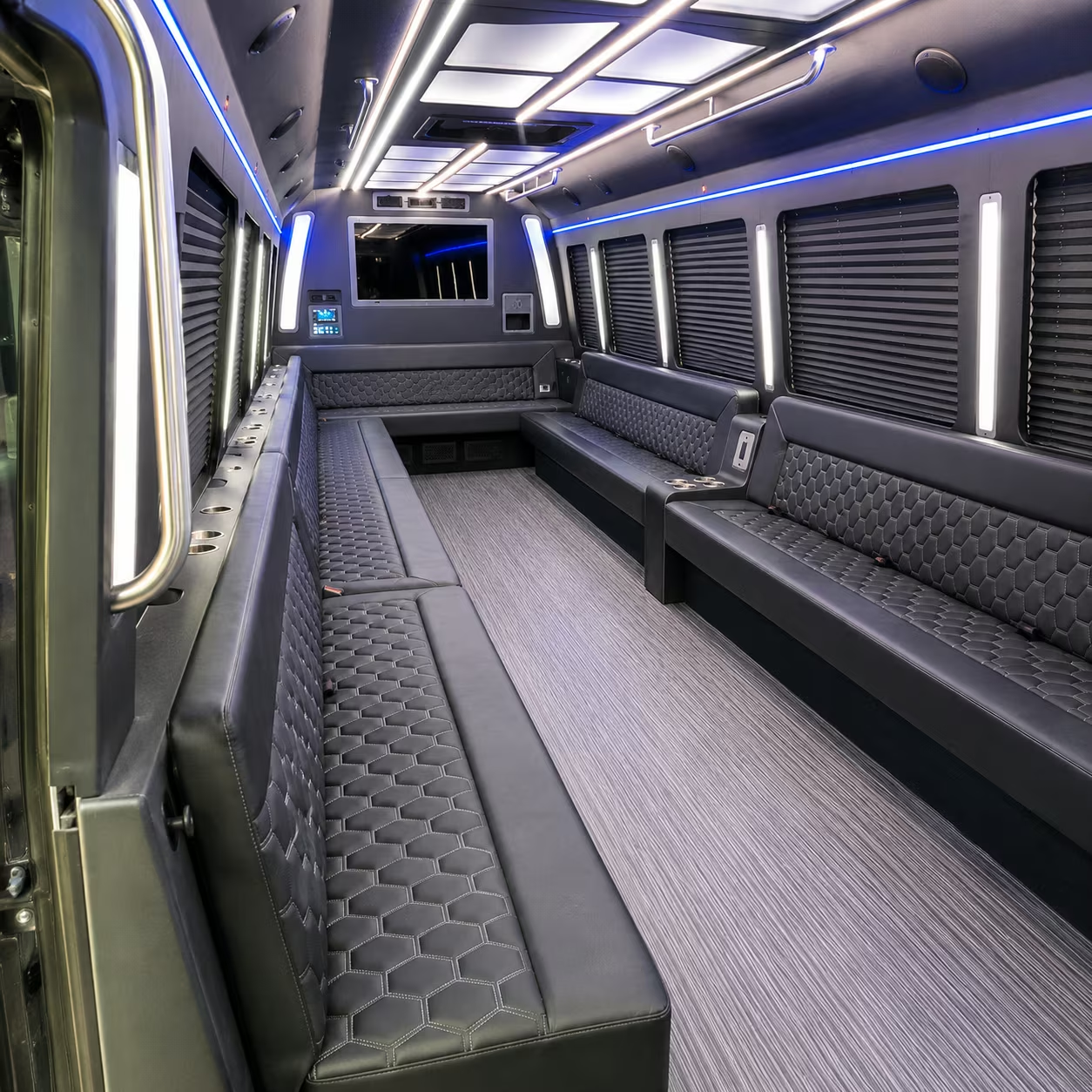
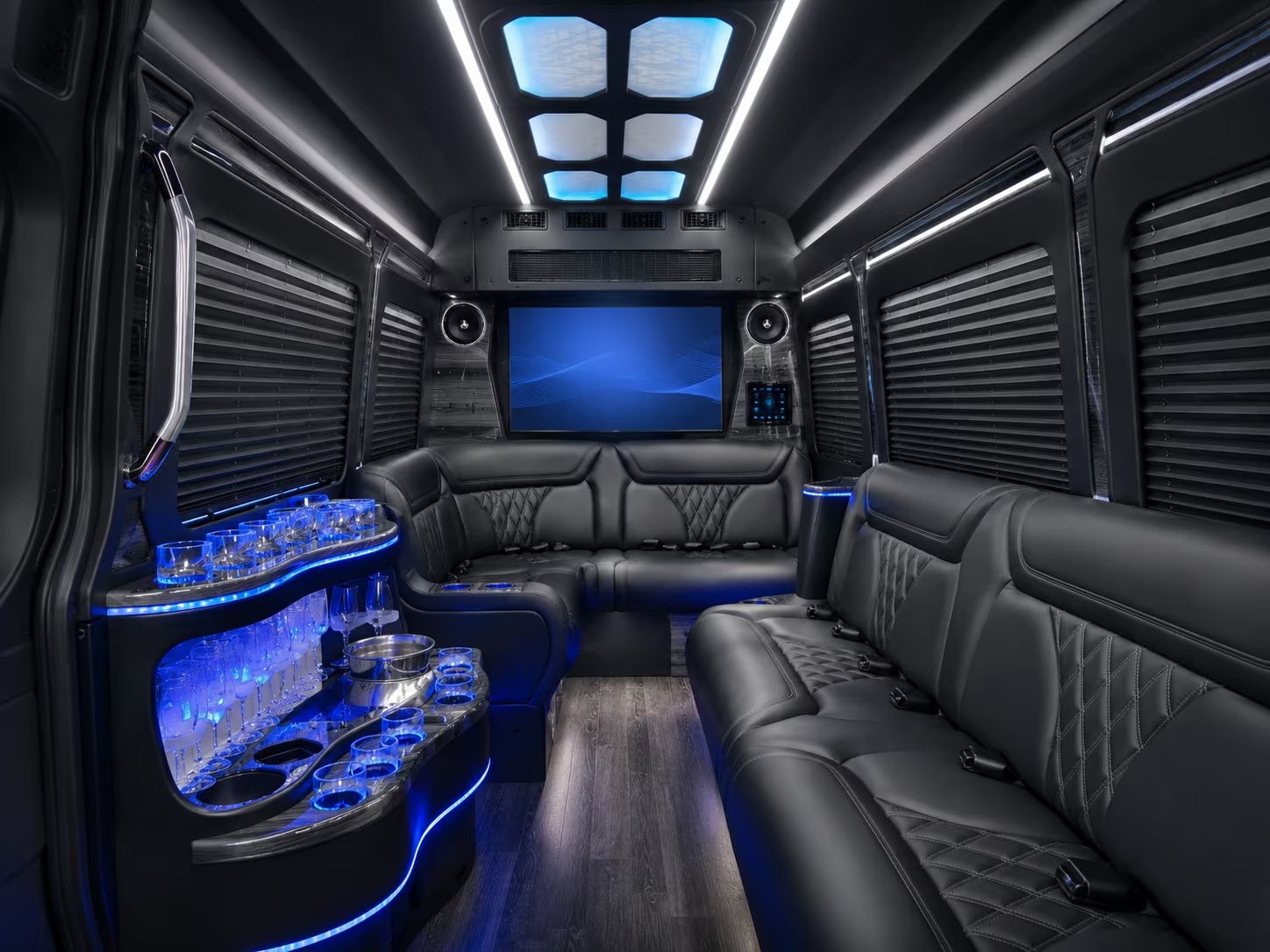
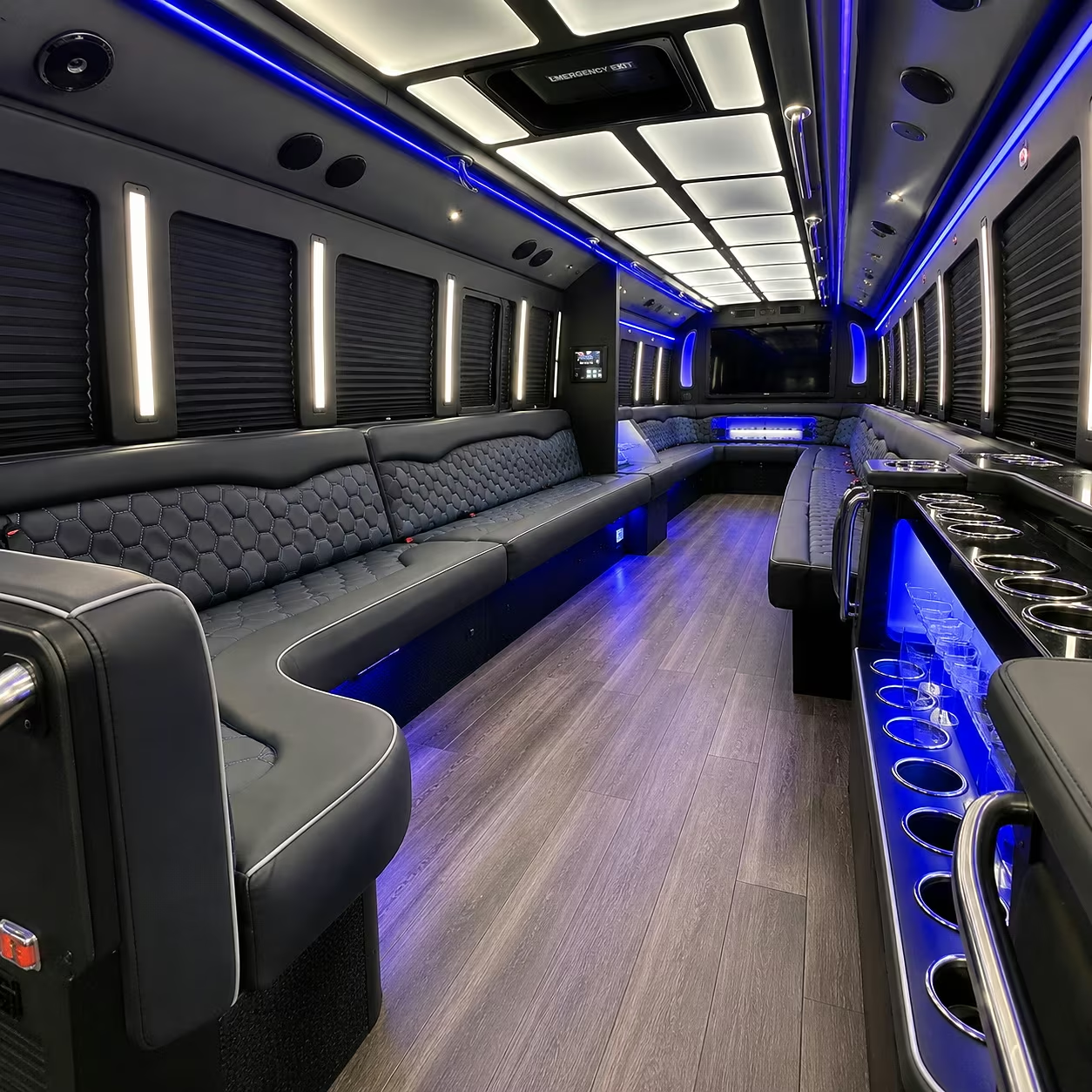
| 25-passenger party bus | ~25 | LED lighting, premium sound, flat-panel TVs | Single-night groups where the I-90 ride is part of the event |
| 50-passenger party bus | ~50 | Full bar setup, wraparound seating, Bluetooth sound | Large single-night groups; festival energy on the road out |
| 40–56 passenger charter bus | Up to 56 | Deep undercarriage bays, reclining seats, onboard restroom, climate control, WiFi, power outlets | Multi-day festivals, camping groups, any run with significant gear |
The practical dividing line between a party bus and a charter bus on the Gorge run is camping gear. For a same-night show where the group packs light, a party bus with premium sound and LED lighting makes the three-hour I-90 drive part of the night. For a Watershed or Bass Canyon group hauling tents, sleeping bags, and a long weekend's worth of supplies, the undercarriage bays on a full charter bus are not optional — they are the entire reason to choose that vehicle.
ADA-accessible vehicles are available through the network; note your needs when requesting a quote. See the full vehicle lineup for all options.
Gorge Amphitheatre Party Bus Rental Prices: What the Quote Depends On
Bus rental pricing for the Seattle-to-Gorge run depends on vehicle size, how many hours the bus is reserved (covering the I-90 drive each way plus any wait or staging time at the venue), the specific date and event, and pickup location. To give you a planning range: a 40–56 passenger charter bus runs roughly $200–$350 per hour or $1,350–$2,850 for a full-day arrangement. A 15–35 passenger minibus runs $200–$250 per hour on weekdays and $200–$275 per hour on weekends.
A 25-passenger party bus runs $250–$350 per hour on weekdays.
For a same-night Seattle-to-Gorge round trip — typically 9 to 11 hours of reserved vehicle time once you account for pickup, the I-90 drive, show duration, post-show wait, and the return — a full charter bus at those ranges could total $1,800–$3,850 depending on size and date. Split across 40 to 56 people, the per-head number regularly undercuts the math on 10 to 14 separate cars handling their own fuel costs, parking, and the Silica Road back-and-forth. These are planning ranges only — the real quote moves with your headcount, your date, and your exact itinerary.
Getting an accurate number takes about a minute: check the Seattle party bus prices page for context, or call 206-207-5590 any time for a free quote at no obligation.
One thing to know for major festival weekends: vehicle availability is the first constraint, not price. Watershed weekend at the end of July and Dave Matthews Band over Labor Day are the two dates where groups calling in late find limited options and higher rates. The earlier you book, the more flexibility you have on vehicle type and pickup time.
2026 Events at Gorge Amphitheatre: What's on the Calendar
The Gorge Amphitheatre's 2026 season runs from late spring through late September, with the summer months anchored by multi-day festivals and the fall bookended by major touring acts. The official Gorge Amphitheatre page on Live Nation carries the full confirmed schedule — events below are from that calendar, with Watershed dates pending official confirmation at publication time.
Watershed Festival (early August 2026) is the Pacific Northwest's largest country music festival and the Gorge's anchor summer event. Three days, camping-centered, with Friday traffic on I-90 that starts building hours before any show. This is a charter bus event for any group above a handful of people — the camping gear logistics alone make a single inbound bus run the obvious answer over a multi-car convoy.
Confirm exact 2026 dates on the official Watershed Festival site before locking in travel plans.
Bass Canyon (August 14–16, 2026) is the Gorge's marquee bass music festival, three days on site with camping as the default mode. Official Bass Canyon shuttles via Bus.com run from SeaTac and Lumen Field for around $75 per person, which works for individuals. For a group with gear and a shared schedule, a private charter bus gives your group its own departure time, its own return window, and enough storage for a weekend's worth of equipment.
Worth comparing both options side by side once your group size is confirmed.
Dave Matthews Band (September 4–6, 2026) — the Labor Day weekend residency that has become the Gorge's signature annual event. Three nights means three separate Silica Road crossings if the group commutes from Seattle, or one camping charter bus run and three nights on site. DMB at the Gorge draws a massive crowd; vehicle supply gets thin well in advance of Labor Day weekend.
Book as soon as tickets are confirmed.
ABGT700 (September 12–13, 2026) is Above & Beyond's two-night celebration at the Gorge — a destination event that pulls fans from across the country and internationally. For groups coordinating members arriving at Seattle-Tacoma International Airport, a charter bus that collects everyone at baggage claim and runs them straight to George is far cleaner than coordinating five separate rideshares from different terminals. Two nights, early September; check Snoqualmie Pass conditions before departure.
Jack Johnson (September 26, 2026) closes the 2026 Gorge season. Single night, late September — worth a WSDOT conditions check before the drive east. Snow at Snoqualmie Pass is possible by this point in the calendar year, and the chain rules for commercial vehicles over 10,000 pounds apply whenever conditions are posted.
Frequently Asked Questions About Renting a Bus to Gorge Amphitheatre
Where exactly does a charter bus drop off at Gorge Amphitheatre?
Commercial shuttles and private charter buses use Gate B on Silica Road — the entry point that also serves day parking, Star Parking, Star Plus Parking, accessible parking, and big rig campers, and where oversized commercial vehicles stage. For your event date, always review the official Gorge visit page to confirm current gate assignments, as lot routing can change by show.
How long does the drive from Seattle to the Gorge take?
Base drive time is 2.5 to 3 hours from downtown Seattle — roughly 150 miles east on I-90 to Exit 143, then six miles on Silica Road NW to the gates. On major festival days (Watershed Friday, Bass Canyon opening day, Labor Day DMB), budget 5 or more hours total once you factor in I-90 congestion through Bellevue and Silica Road entry queues. The venue recommends early arrival and advises that guests be prepared to wait 2–4 hours just to get in.
Midday departure from Seattle is not aggressive on a peak festival day — it's appropriate.
Can Uber or Lyft pick my group up after the show?
Probably not. The Gorge's official FAQ says rideshare companies "may drop you off but we cannot guarantee a pick up." In practice, the combination of rural location, limited cell service near the Columbia River, and 27,000-plus people exiting simultaneously makes on-demand rideshare effectively unavailable post-show.
A private bus with a pre-set pickup window is the most reliable way a large group leaves George, WA on a predictable schedule after the encore.
Should my group camp or do a same-night return?
Same-night return makes sense for single-night shows where everyone has morning obligations — one inbound bus run, a staged post-show pickup, and back in Seattle by 3–4 AM. For multi-day festivals like Watershed, Bass Canyon, or the Dave Matthews Band residency, camping is almost always the smarter choice. The alternative — commuting from Seattle each day of a three-day festival — means three separate Silica Road queues and three separate Snoqualmie Pass crossings.
Most groups that try the commute approach once do not repeat it.
Do commercial vehicles need chains over Snoqualmie Pass?
Yes, under certain conditions. Per WSDOT's commercial vehicle chain requirements, vehicles over 10,000 pounds must carry chains at all times on I-90 between North Bend and Ellensburg from November 1 through April 1. Between April 2 and October 31, chains must be installed whenever WSDOT posts chain requirements for conditions.
Late-season Gorge shows in September run close to shoulder-season weather on the pass — check WSDOT travel alerts before any fall date.
How much does it cost to rent a bus from Seattle to the Gorge Amphitheatre?
Planning ranges: a 40–56 passenger charter bus runs approximately $200–$350 per hour or $1,350–$2,850 for a full-day arrangement. A 15–35 passenger minibus runs $200–$275 per hour on weekends. A 25-passenger party bus runs $250–$350 per hour on weekdays.
The actual quote depends on vehicle size, total reserved hours, your date, and pickup location. Call 206-207-5590 any time — a support team can put together a quote for your specific trip in about a minute.
How far in advance should I book a bus to the Gorge?
For single-night shows outside the peak festival window, 2–4 weeks of lead time is usually workable. For Watershed (early August), Bass Canyon (mid-August), and Dave Matthews Band Labor Day weekend, book as soon as your tickets are confirmed — these are the three dates where vehicle supply compresses first, and waiting until a few weeks before the event typically means higher pricing or limited vehicle options. Multi-day camping groups need more lead time than single-night runs because the arrangement takes more coordination.
The earlier you call, the more options you have.
Is there parking at the Gorge Amphitheatre for groups that drive?
Yes — general admission day parking is included with your event ticket. Star Parking and Star Plus Parking are available as upgrades, and accessible parking is at Gate B with a valid placard (spaces are limited). No overnight parking is permitted in day lots — vehicles left after hours are towed at the owner's expense.
Camping guests who plan to arrive by car and stay overnight need to book a camping spot (Gates A, B, or D depending on camping type) rather than relying on day lot parking.
Book Your Party Bus or Charter Bus to the Gorge Amphitheatre
Whether it's a same-night Jack Johnson run or a full Watershed camping haul with 50 people and three days of gear, the group transportation plan starts the same way: one quick form or one call. Partybusinseattle.com connects you to a large network of bus companies serving Seattle — fill out the form on this site to compare vehicles and pricing in under 30 seconds, or call 206-207-5590 any time for a free quote with no obligation and no account required. The sooner you lock in the vehicle, the better your options — especially for Bass Canyon, the Dave Matthews Band Labor Day residency, and any Gorge weekend where 27,500 people are lining up on Silica Road alongside you.
Also planning a show at Auburn's amphitheatre? The White River Amphitheatre transportation guide covers group drop-off and parking logistics for that venue.